5 April 2026
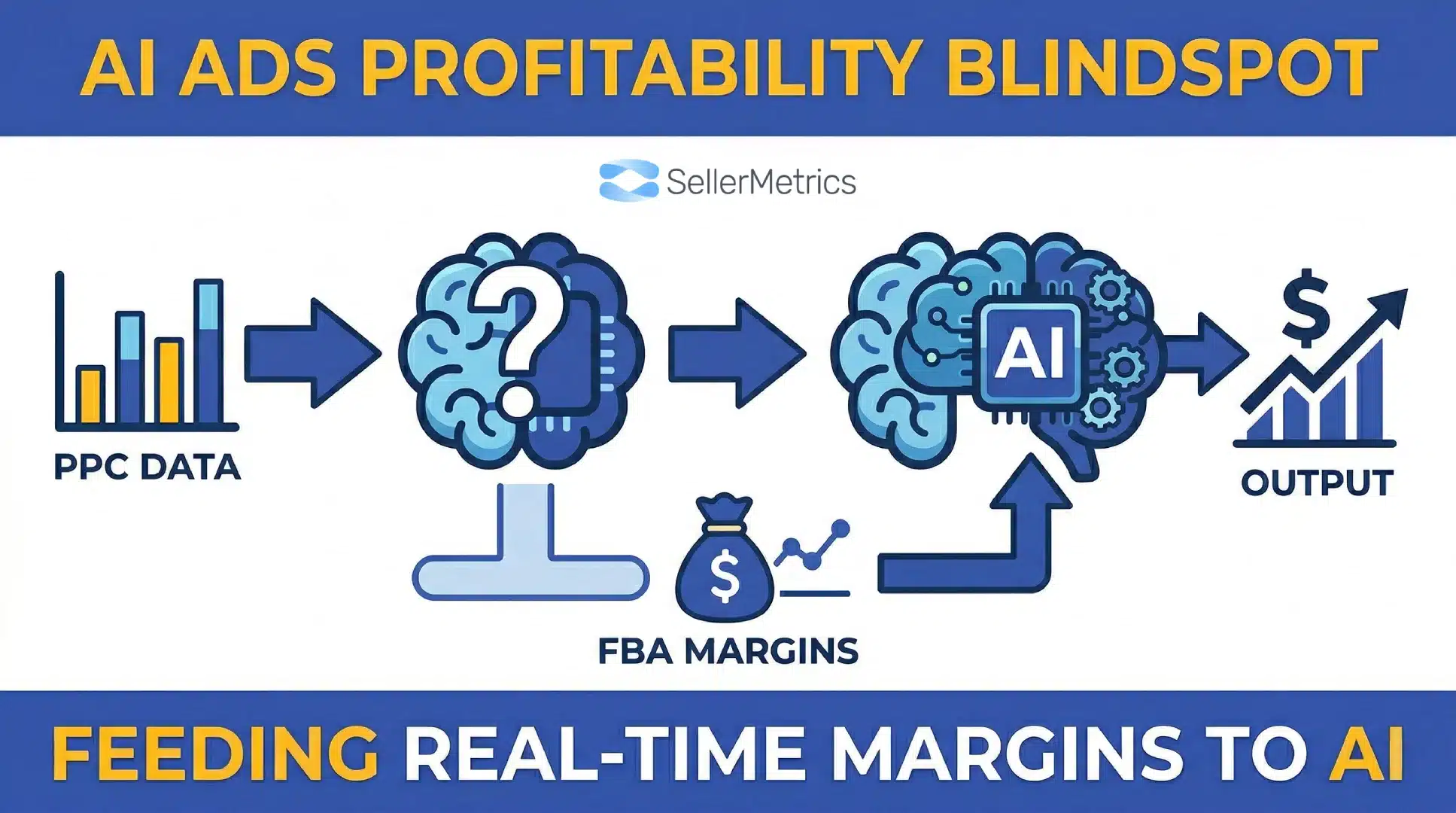
The MCP Blindspot: How to Feed Real-Time FBA Margins into Claude Code
TweetLinkedInShareEmailPrint 20 min read By Rick Wong Updated Apr 05, 2026 TL;DR Why is my AI ad tool d...

 23 December 2025

If you manage Amazon advertising at scale, you have likely seen the claim repeated across the Amazon Ads console, product updates, and industry coverage. Amazon claims AI images performance can improve return on ad spend by more than 10 percent. According to Amazon Ads, advertisers using AI-generated lifestyle images in Sponsored Brands campaigns achieved an average 10.3 percent lift in ROAS compared to campaigns using standard product images.
This claim has attracted attention for a simple reason. Creative quality has historically been one of the most expensive and limiting factors in Amazon advertising. Lifestyle photography requires time, planning, and budget, which many sellers cannot justify for lower-priced or functional products. Amazon’s introduction of AI-powered image generation directly challenges that constraint.
The critical question is not whether the technology exists. The real question is whether the performance gains are real, repeatable, and sustainable across different product categories. This article examines Amazon’s claims of AI image performance using verified data, advertising mechanics, and controlled testing logic so sellers can decide how to apply it responsibly.
Article of Contents
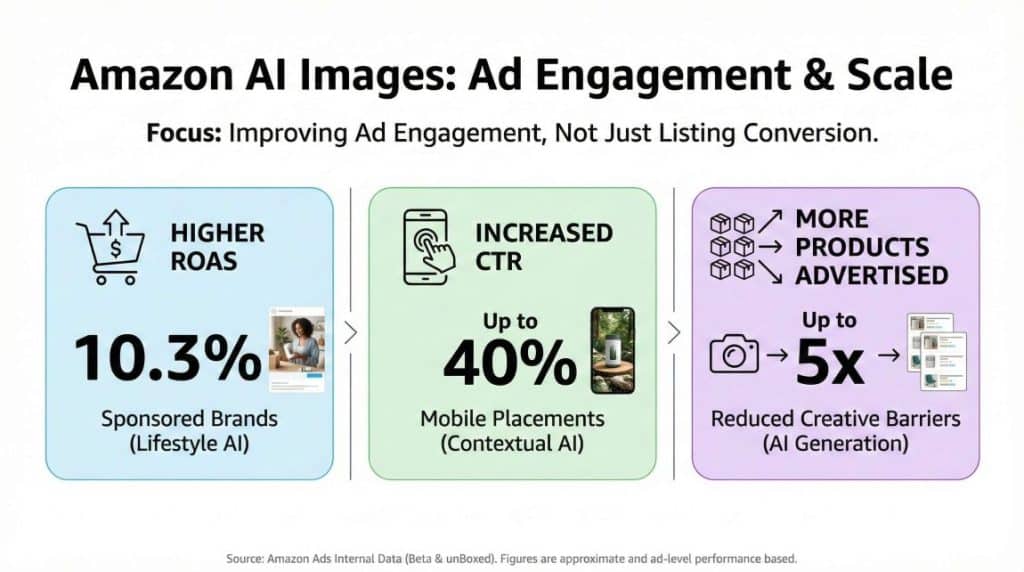
Amazon Ads publicly states that advertisers who used AI-generated images in Sponsored Brands campaigns saw measurable improvements across multiple performance metrics. These claims are based on internal beta testing data published through Amazon Ads announcements and unboxed event materials.
According to Amazon Ads data:
These claims focus specifically on advertising performance, not listing conversion rate alone. This distinction matters. Amazon claims AI image performance is fundamentally about improving engagement at the ad level, not replacing core listing photography requirements.
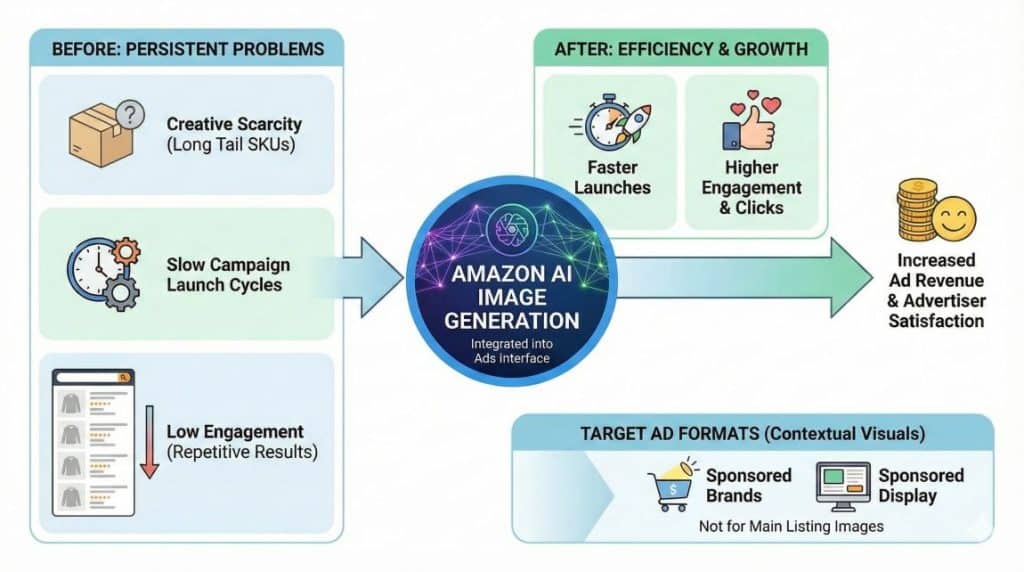
Amazon’s business model depends on advertising efficiency. Higher engagement leads to more clicks, which increases ad revenue while improving advertiser satisfaction. AI image generation aligns with this incentive structure.
From a platform perspective, AI-generated images solve three persistent problems:
By integrating AI image generation directly into the Amazon Ads interface, Amazon lowers friction while keeping creative output within policy guidelines.
This is why Amazon claims AI image performance focuses on Sponsored Brands and Sponsored Display placements rather than main listing images. These ad formats benefit most from contextual visuals.
To evaluate whether Amazon’s claims about AI image performance are realistic, it is important to understand how creativity affects Amazon’s advertising outcomes.
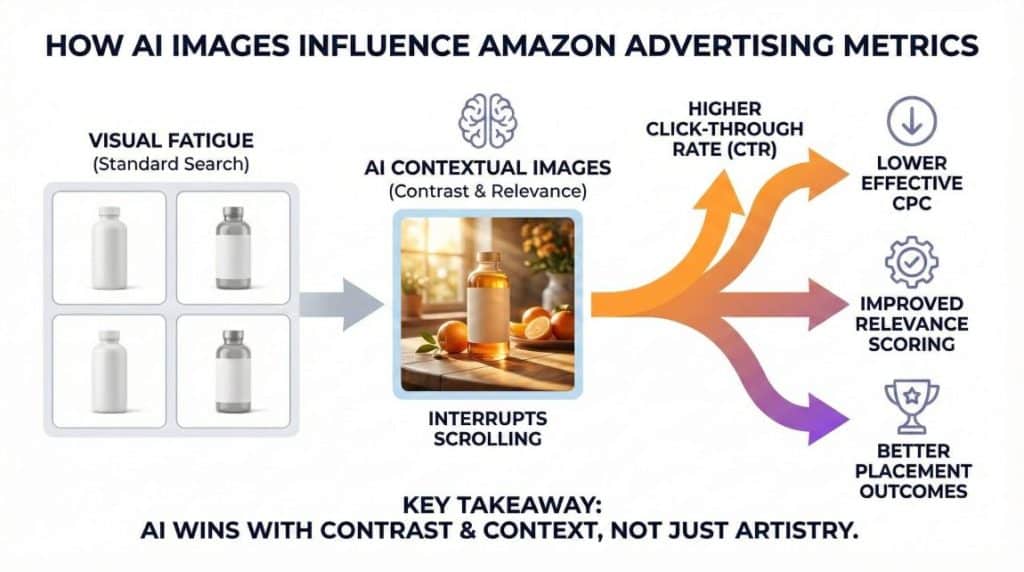
In Amazon search results, most product tiles look visually similar. White backgrounds, identical framing, and minimal context create what advertisers often refer to as visual fatigue.
Contextual images break this pattern. When a shopper scrolls through search results, the human brain reacts to contrast and relevance. A product placed in a realistic environment interrupts scrolling behavior and increases the likelihood of engagement.
This directly impacts Amazon’s Through Rate, which is one of the most influential performance signals in Amazon advertising.
A higher click-through rate can lead to:
AI-generated images are not improving performance because they are artistic. They improve performance because they create contrast and context.
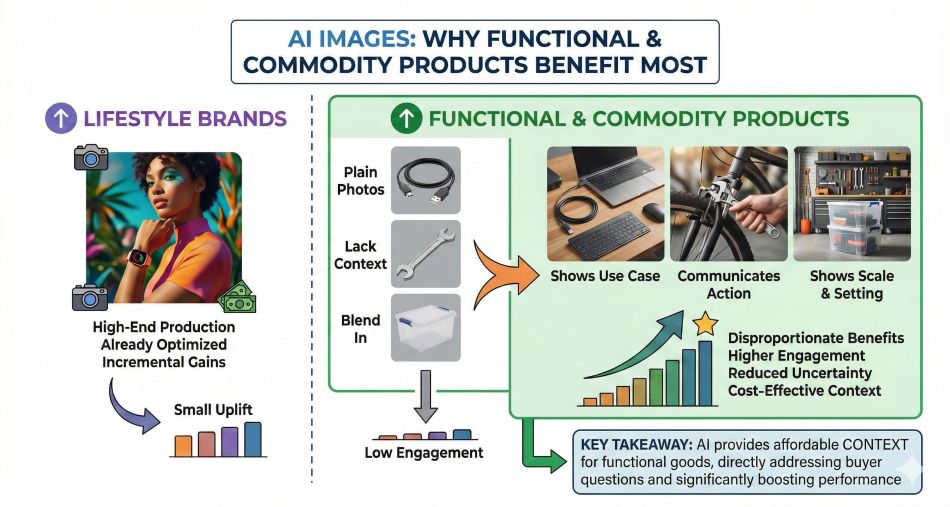
One of the most overlooked insights in Amazon claims that AI image performance is which product categories benefit most from this technology.
Lifestyle brands already invest heavily in professional photography. For them, AI-generated images offer incremental gains.
Functional and commodity products experience disproportionate benefits.
Examples include:
These products historically rely on plain product images because lifestyle photography is not cost-effective. As a result, their ads often blend into the background.
AI-generated images provide context without requiring expensive production. A cable shown on a desk communicates a use case. A storage bin shown in a garage communicates scale. These signals directly address buyer uncertainty.
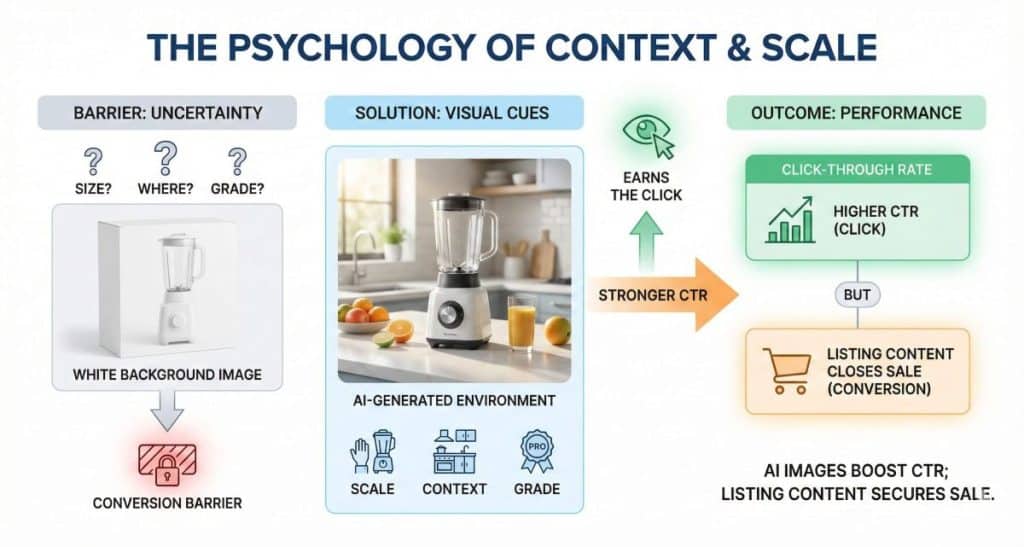
For many commodity products, the primary conversion barrier is not desire. It is understanding.
Buyers want to know:
White background images do not answer these questions effectively. AI-generated environments provide visual cues that resolve uncertainty.
This explains why Amazon claims AI image performance improvements often show stronger gains in CTR than conversion rate. The image earns the click. The listing content must still close the sale.
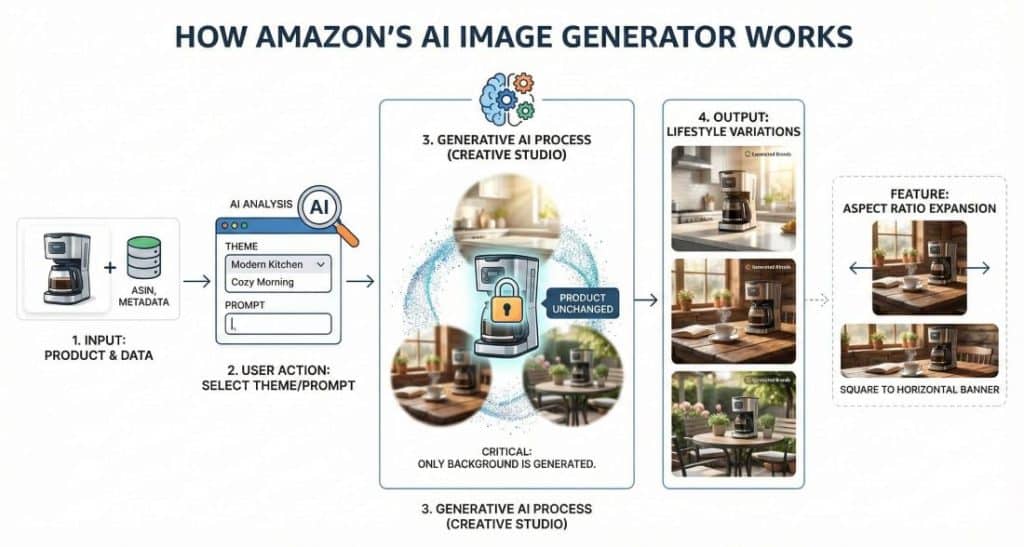
Amazon’s AI image generator is part of its Creative Studio and Sponsored Brands creative tools. The system uses generative AI models trained on product information and approved imagery.
The process works as follows:
The product itself remains unchanged. Only the background environment is generated. This distinction is critical for compliance.
The tool also supports aspect ratio expansion, which allows square product images to be extended into horizontal formats suitable for Sponsored Brands banners.
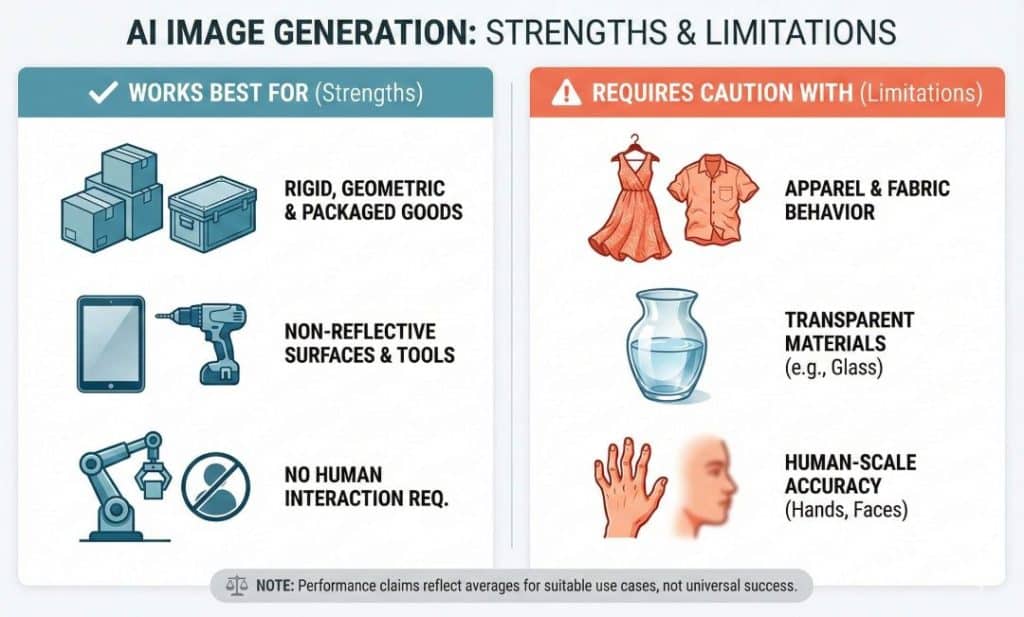
AI-generated images are not universally effective. Understanding where they work best prevents brand damage and wasted spend.
AI image generation works best for:
Examples include boxes, electronics, tools, containers, and packaged goods.
AI images struggle with:
Hands, faces, and fabric behavior remain weak points in generative imagery.
Amazon claims AI image performance does not imply universal success. It reflects averages across suitable use cases.
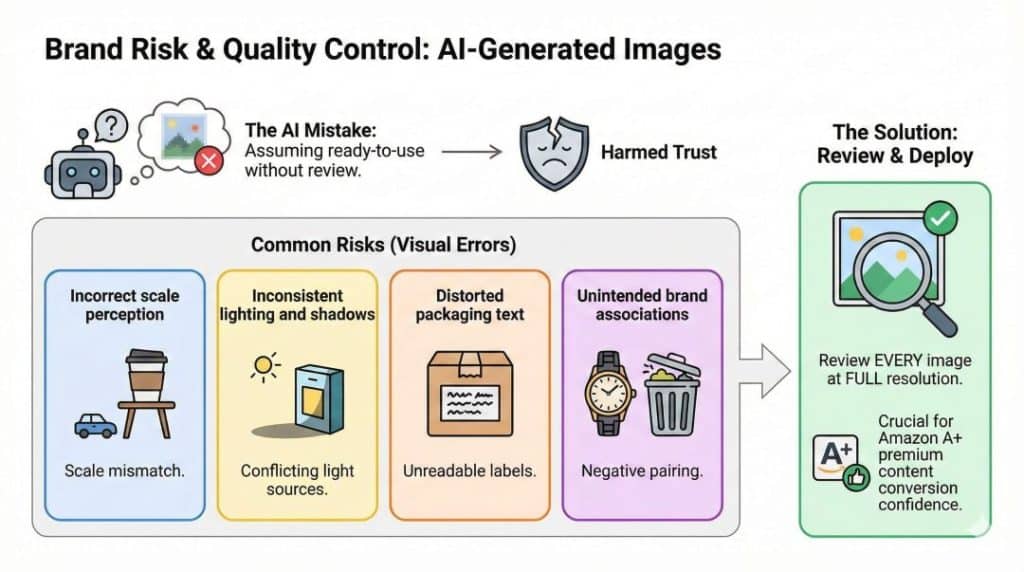
One of the biggest mistakes advertisers make is assuming AI output is ready for use without review. Poor quality images can harm trust faster than plain images.
Common risks include:
Every generated image should be reviewed at full resolution before deployment.
This is especially important when using images alongside Amazon A+ premium content, where visual quality strongly influences conversion confidence.
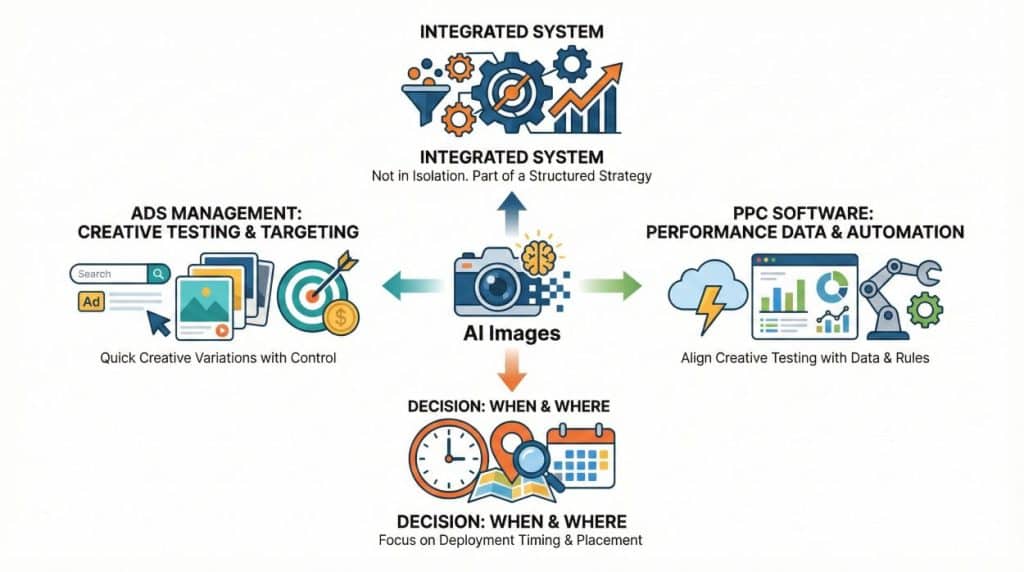
AI-generated images should not be viewed in isolation. They work best when integrated into a structured advertising system.
For sellers using Amazon Sponsored Ads Management, AI images provide an opportunity to test creative variations quickly while maintaining targeting and bidding controls.
They also pair well with advanced workflows supported by Amazon PPC software, where creative testing can be aligned with performance data and automation rules.
The key decision is not whether to use AI images, but when and where to deploy them.
AI image generation intersects with a broader strategic decision faced by many sellers. Manual PPC or automated PPC is not a binary choice. Creative automation complements bidding automation.
AI images reduce creative friction. Automated bidding systems then optimize delivery based on engagement signals.
When aligned correctly, this combination improves efficiency without sacrificing control.
Amazon claims AI image performance improvements do not come from lowering product costs or increasing prices. They come from efficiency.
Higher engagement improves ad relevance. Improved relevance lowers wasted spend. Lower wasted spend improves ROAS.
This is why ROAS gains are often accompanied by improvements in cost efficiency metrics rather than dramatic conversion rate spikes.
Understanding this mechanism helps sellers evaluate performance realistically.
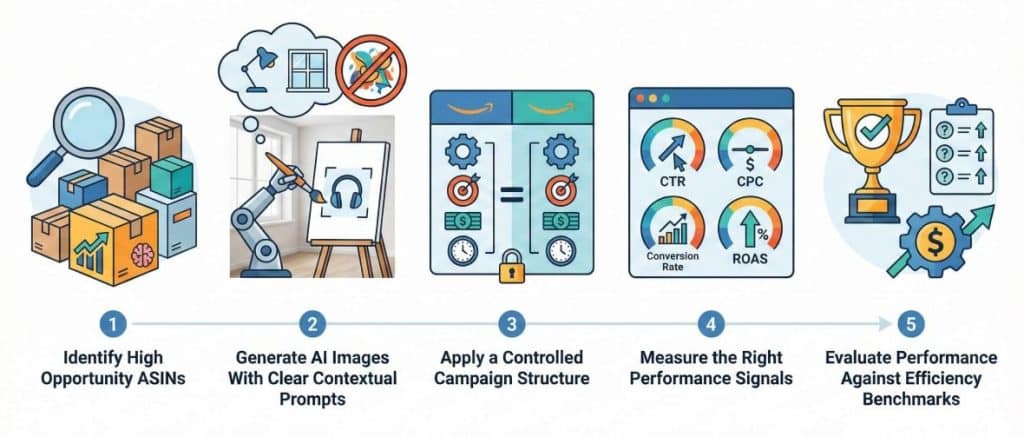
Amazon claims AI image performance should never be accepted blindly. The safest way to unlock gains while protecting your brand is to apply a controlled testing framework that isolates creative impact.
This process is designed for sellers who want measurable results rather than anecdotal wins.
Not every product deserves immediate testing. Start with ASINs that already receive meaningful impressions but show weak engagement.
Look for products that meet the following criteria:
Avoid products that already rely heavily on emotional branding or premium lifestyle photography. Those often show smaller marginal gains.
When using Amazon’s image generator, simplicity matters more than creativity. Overly complex prompts increase the risk of unrealistic outputs.
Effective prompt principles include:
For example, a power strip performs better when placed on a desk or workbench rather than in an abstract modern interior.
This stage directly supports Amazon’s claims of AI image performance by ensuring visual clarity instead of novelty.
To evaluate performance honestly, creative testing must be isolated from bidding and targeting changes.
Recommended setup:
This structure ensures that changes in performance can be attributed to the image itself.
Many advertisers focus only on sales or ROAS. This is a mistake when testing creative.
Primary evaluation metrics should include:
ROAS improvements typically follow engagement improvements. If CTR does not improve, ROAS gains are unlikely.
This is also where advertisers begin to see how creative interacts with the Amazon advertising auction, since higher engagement often improves auction efficiency over time.
Performance should always be evaluated relative to efficiency targets, not isolated metrics.
Ask the following questions:
Understanding what is a good ACoS on Amazon for your category is is essential here. AI images should help you move closer to that target, not further away.
One of the most overlooked benefits of AI-generated images is their indirect impact on organic ranking.
When ads generate higher quality engagement, Amazon receives stronger relevance signals. These signals often translate into improved organic visibility over time.
While Amazon claims AI images performance focuses on paid metrics, sellers frequently observe secondary organic benefits when traffic quality improves.
This effect is strongest for products that already rank on page one or two but struggle to maintain consistent engagement.
AI images are not a replacement for proper listing fundamentals. They are an amplifier.
If your product detail page lacks clarity, benefits, or trust signals, improved ad engagement will not sustain conversions.
AI-generated creatives work best when paired with strong backend optimization and structured content frameworks such as Amazon listing optimization services.
Listings that clearly communicate features, use cases, and differentiation convert more efficiently once the click is earned.
Creative consistency matters. AI-generated images should reinforce brand tone rather than conflict with it.
This is especially important for brands investing in Amazon A+ premium content, where visual storytelling supports higher conversion rates.
Best practices include:
AI images should feel like an extension of your brand, not a shortcut around it.
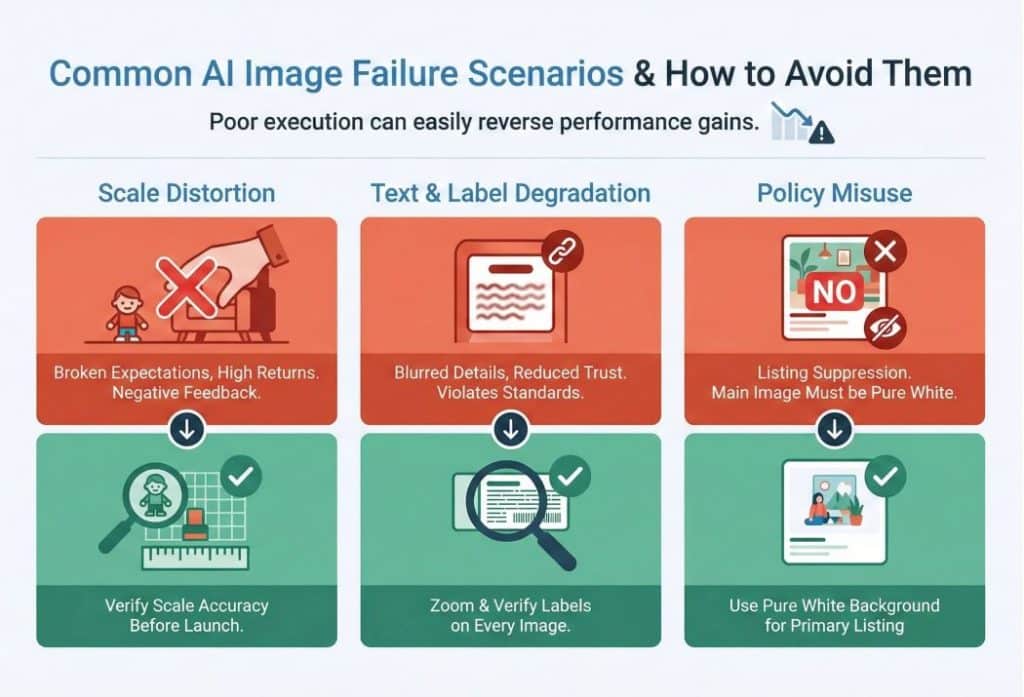
Amazon claims AI images performance reflects average outcomes. Poor execution can easily reverse those gains.
If the AI exaggerates product size relative to its environment, customer expectations are broken. This leads to higher returns and negative feedback.
Always verify scale accuracy before launch.
Fine print on packaging can become blurred or distorted. This reduces trust and can violate brand standards.
Zoom in on every generated image before approving it.
AI-generated images should never replace your main image. Amazon still requires a pure white background for the primary listing image.
Violating this rule can result in listing suppression.
AI image generation is not universally beneficial.
Avoid testing AI images when:
In these cases, professional photography remains the safer option.
AI images deliver the greatest value when integrated into scalable systems rather than treated as one-off experiments.
For advertisers managing multiple brands or large catalogs, pairing creative testing with structured workflows and automation tools ensures consistency.
This is where experienced teams leverage Amazon PPC Software to coordinate creative rotation, bidding logic, and reporting in one system.
The goal is repeatable performance, not isolated wins.
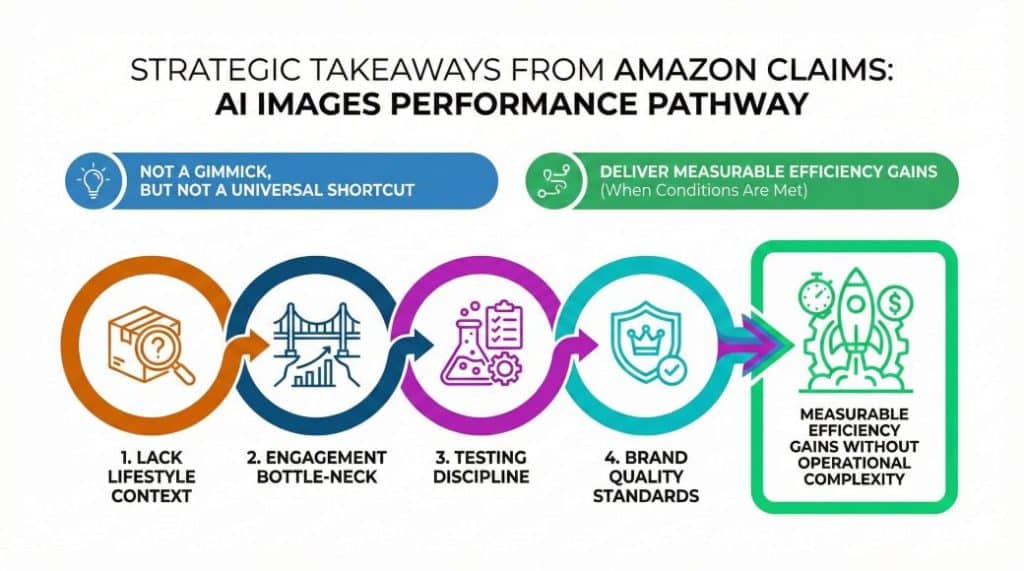
Amazon claims AI image performance is not a marketing gimmick, but it is also not a universal shortcut.
The strongest results occur when:
When those conditions are met, AI-generated images can deliver measurable efficiency gains without increasing operational complexity.
Amazon claims AI image performance highlights a broader shift in Amazon advertising. Creative relevance now plays a greater role in efficiency than ever before.
AI image generation is not about replacing professional photography. It is about removing creative friction for the majority of products that never receive it.
For sellers who manage complex catalogs, rising ad costs, and increasing competition, this tool offers a practical advantage when used responsibly.
If you want to validate AI-driven performance improvements while maintaining full control over efficiency, reporting, and scale, SellerMetrics helps you connect creative testing with data-driven advertising decisions.
Book a consultation with SellerMetrics today and see how structured automation and performance insights can turn Amazon advertising experimentation into predictable growth.
Amazon currently provides AI image generation at no additional cost within the Amazon Ads interface. The platform benefits from higher engagement, which aligns incentives. This may evolve, but no pricing has been announced.
Yes, Amazon accepts AI-generated images when they are used correctly within its advertising and brand content tools. AI-generated backgrounds are allowed for ad creatives, Sponsored Brands, Sponsored Display, and secondary listing images, provided the product itself is real and accurately represented.
Amazon has benefited from AI by improving advertising efficiency, creative scalability, and overall platform engagement. AI tools help advertisers launch more campaigns faster, which increases ad spend participation and click volume across the marketplace.
No. Amazon requires the primary product image to have a pure white background. AI-generated images should only be used for ads or secondary content.
No. They perform best for rigid, functional products. Apparel, fashion, and human-dependent products require caution.
A minimum of 14 days or sufficient impressions is recommended. This ensures statistically meaningful engagement data. Short tests often produce misleading results.
Indirectly, yes. Higher engagement and sales velocity can strengthen relevance signals. However, listings must still be optimized to convert.
Yes, when used correctly. The product must be real, and the image must not misrepresent size, function, or branding. Always review outputs manually.
If engagement does not improve, costs may rise. This usually indicates poor image quality or mismatched context. Testing discipline prevents wasted spend.
No. They complement it. Professional photography remains essential for hero products and brand storytelling.
5 April 2026
TweetLinkedInShareEmailPrint 20 min read By Rick Wong Updated Apr 05, 2026 TL;DR Why is my AI ad tool d...
4 April 2026
TweetLinkedInShareEmailPrint 8 min read By Rick Wong Updated Mar 30, 2026 TL;DR What is the difference ...
31 March 2026
TweetLinkedInShareEmailPrint 8 min read By Rick Wong Updated Mar 30, 2026 TL;DR What exactly is the Uni...