13 June 2026
Amazon Multi-Touch Attribution: What Sellers Need to Know in 2026
TweetLinkedInShareEmailPrint 8 min read By Rick Wong Updated Jun 13, 2026 TL;DR What is Amazon Multi-To...

 5 May 2026

If you’ve been running Amazon ads lately, you’ve probably noticed something different about how your budgets behave. Amazon’s new budget rules have changed the way advertising funds are managed, giving the platform far more control over pacing and spend allocation. While Amazon claims these updates make campaigns more efficient, many sellers have seen erratic spend patterns, early budget exhaustion, and unpredictable performance swings.
Understanding these changes is now critical. Sellers who keep managing ads the old way are finding themselves paying more for fewer conversions, while data-driven advertisers are building new systems to protect their margins. This guide breaks down exactly what changed, why it happened, and how to adapt using reliable tools like Amazon Advertising Management Services, strategic automation, and better budget control frameworks.
At SellerMetrics, we’ve analysed thousands of campaigns to decode how the new budget logic behaves. Our goal is to help you regain control, keep spending efficiently, and use the system to your advantage.
Article of Contents
Amazon’s advertising platform now operates more like a predictive investment engine than a simple daily spend tracker. These updates prioritise profitability for Amazon by pushing your ads more aggressively when its algorithms detect “high-value” buyers.
For sellers, that means:
Brands that rely on basic Amazon PPC Services or manual monitoring are finding it difficult to stay consistent. Instead, they need smarter strategies that combine automation and data analysis. Professional Amazon advertising management gives brands the visibility and control needed to prevent overspending and keep campaigns profitable under these new conditions.
Until recently, daily budgets acted as reliable limits. If you set a £50 daily budget, your campaign stops spending once that amount is reached. With Amazon’s new budget rules, that cap can now extend by up to 25% when the system detects high purchase intent among shoppers.
The biggest shifts include:
From Amazon’s perspective, this ensures your ads appear when customers are most likely to buy. From yours, it can lead to loss of pacing control and overspending if not closely monitored.
Agencies like SellerMetrics use Amazon PPC Software to track these fluctuations in real time. This software allows advertisers to pause campaigns, rebalance spend, and apply data-driven adjustments before overspend occurs.
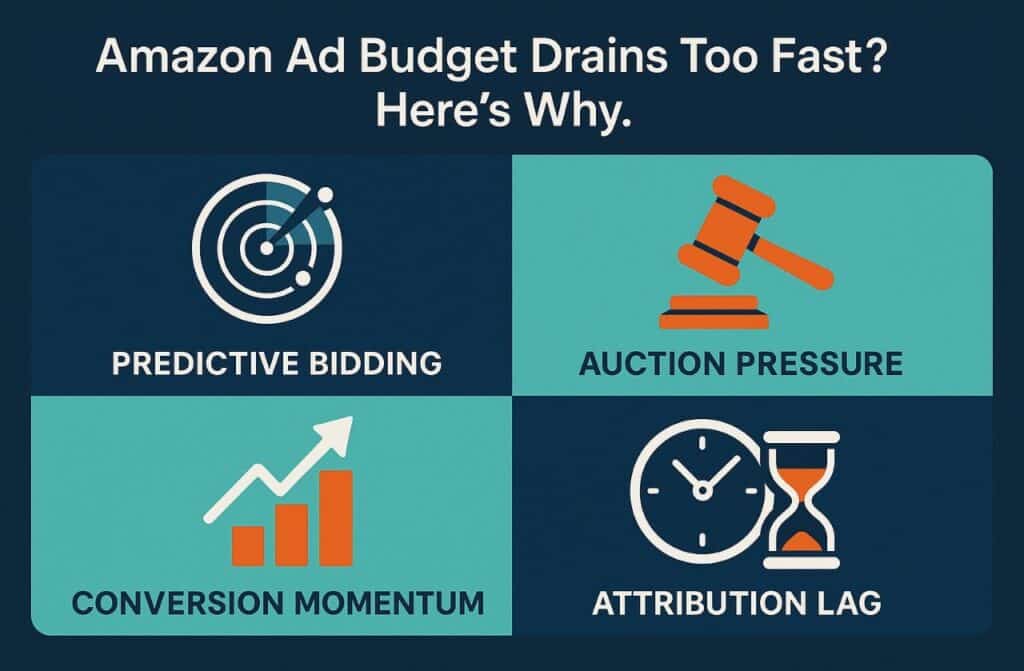
Many advertisers report waking up to discover half their daily budget spent before lunchtime. This issue is not a glitch but an outcome of how Amazon’s predictive algorithms now work.
The following factors are driving budget volatility:
When the algorithm identifies strong buyer intent signals, it automatically raises your ad exposure to capture the opportunity. This increases impressions but also accelerates spend.
The Amazon advertising auction has become more aggressive. If competitors push higher bids, Amazon may match that pace to keep your ads visible, even if it means breaching your original budget cap.
Amazon prioritises campaigns with recent success. If one campaign converts well in the morning, the platform might keep funding it throughout the day, even after performance drops.
Amazon’s attribution system often delays conversion data. The platform continues spending on the assumption that conversions will catch up, sometimes resulting in wasted ad spend.
To counter these behaviours, advertisers must use precise automation tools and disciplined oversight. SellerMetrics integrates advanced Amazon PPC Software with manual account auditing to maintain control over daily pacing and ad exposure.
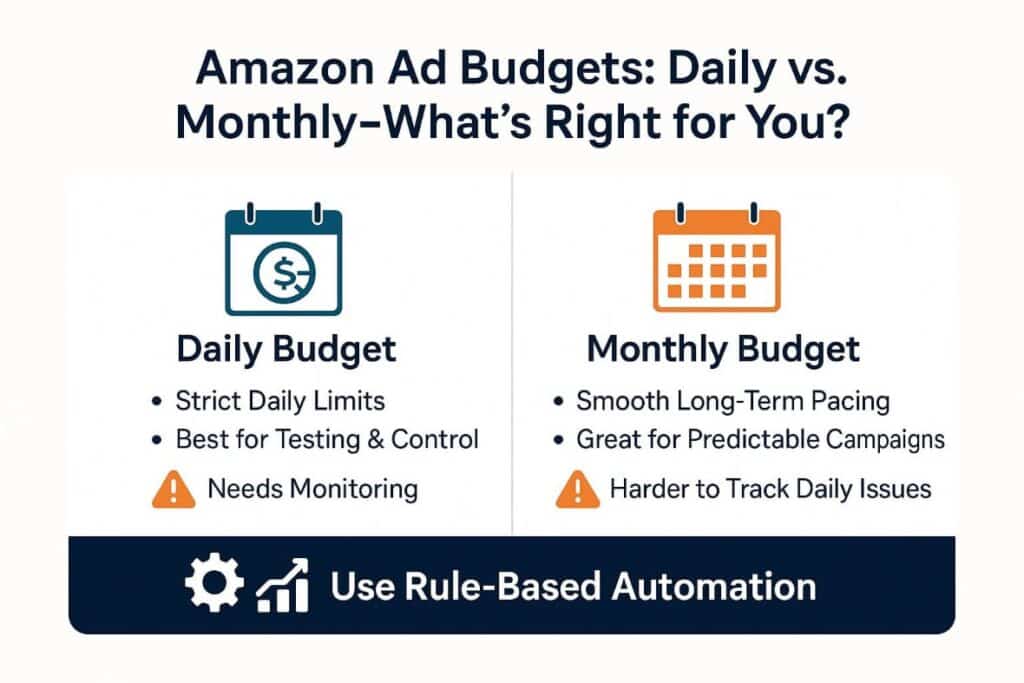
Choosing the right budgeting model has become a major factor in campaign profitability. The effectiveness of daily and monthly budgets under Amazon’s new budget rules depends largely on your product type and how closely you monitor performance.
Advantages:
Disadvantages:
Advantages:
Disadvantages:
SellerMetrics recommends starting with daily budgets supported by rule-based automation. Combining that approach with the right Manual PPC or Automated PPC framework gives you flexibility while preventing runaway spend.
To understand why spend behaves differently, you need to understand how the Amazon advertising auction works. Each time a shopper searches for a product, Amazon runs a split-second auction to decide which ads appear and at what cost.
The algorithm now weighs factors like bid amount, ad quality, and predicted click-through rates. Under the new system, Amazon bids more aggressively when it sees potential for higher conversions. That means:
SellerMetrics advises brands to maintain a balance between bid intensity and listing optimisation. Improving relevance through better keywords and content not only reduces cost per click but also stabilises your campaign budget over time.
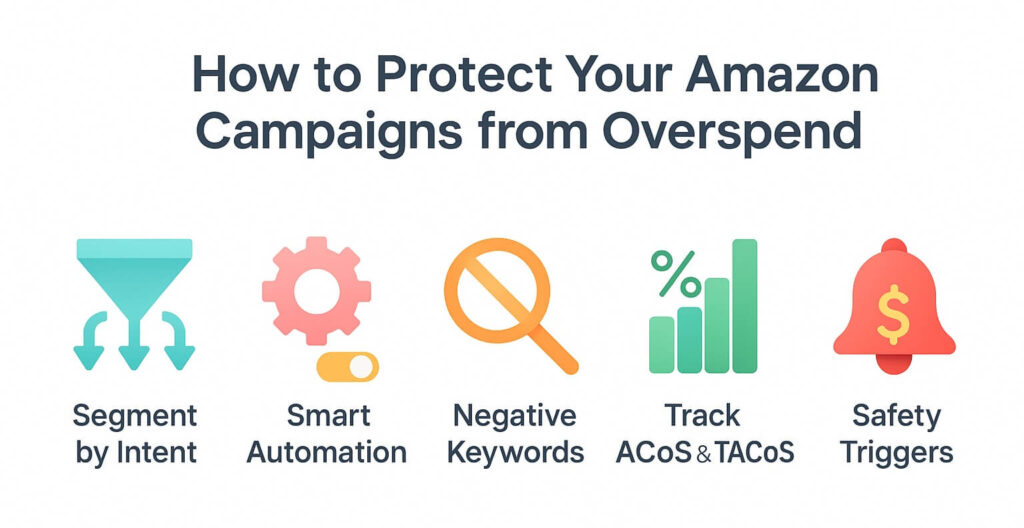
You can’t stop Amazon from running its algorithmic budget logic, but you can limit its negative impact. Sellers must now use proactive strategies that focus on structure, automation, and precision control.
Break your campaigns into clear categories:
This segmentation isolates performance and ensures high-spend campaigns don’t drain funds meant for testing.
Don’t rely solely on Amazon’s automation. Use custom Amazon PPC Software to create rule-based adjustments such as:
Adding negative keywords Amazon helps exclude irrelevant search terms that burn through budget without generating conversions. This remains one of the simplest yet most effective ways to prevent wasted spend.
Keep a close eye on what is a good ACoS on Amazon and what is a good TACoS on Amazon benchmarks. These metrics measure how much you’re spending relative to your total revenue and overall advertising investment. Tracking them ensures every pound spent contributes to growth rather than loss.
Set up daily checks to pause or reduce bids when performance drops or costs rise sharply. Automation can execute these changes instantly, protecting your campaigns when you can’t be online to react.
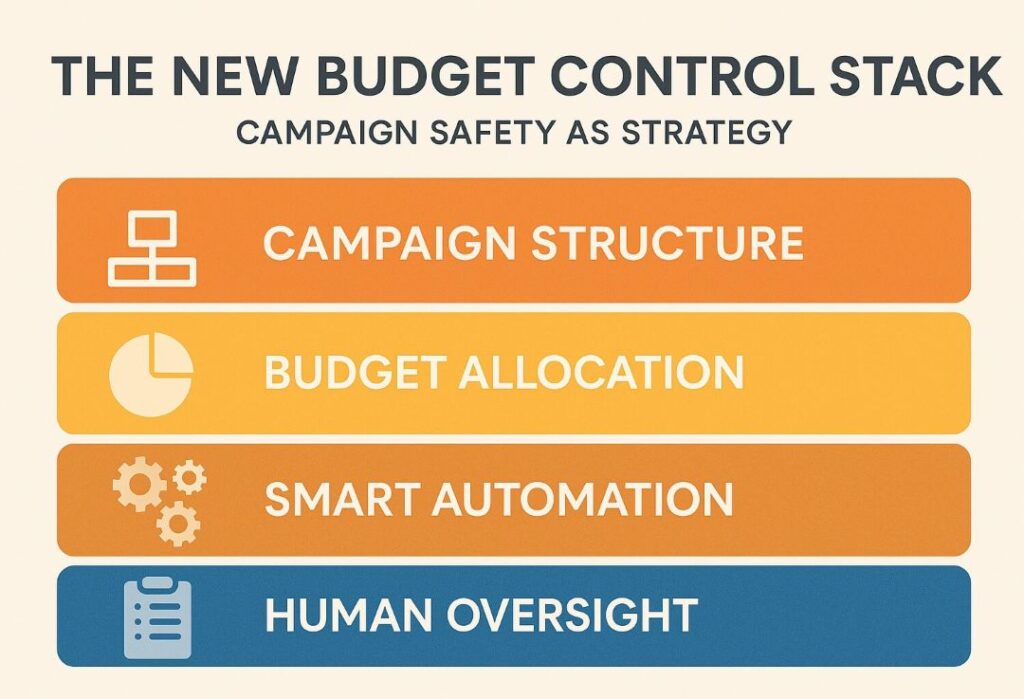
In the past, successful Amazon advertising focused on finding the right keywords and managing bids effectively. While those skills are still vital, Amazon’s new budget rules have introduced a new priority: campaign safety. Managing your ad spend has become a strategic discipline in its own right.
At SellerMetrics, we view advertising budgets as capital investments that must be safeguarded through layered control systems. Every decision about how much to spend and where to spend it directly affects your profit margins.
Your first layer of defence is structure. Successful sellers no longer group all keywords or ASINs under one campaign. Instead, they segment campaigns by:
This approach limits waste and improves data accuracy. For example, by isolating high-performing branded keywords from exploratory campaigns, you ensure that essential ads stay funded even if discovery campaigns underperform.
Rather than distributing budgets evenly, allocate them based on maturity and ROI potential. Discovery or non-branded campaigns deserve smaller, controlled budgets, while proven winners can scale flexibly. This kind of discipline is what separates sustainable brands from those that depend on luck or automation alone.
SellerMetrics’ Amazon advertising management system uses analytics to identify underperforming campaigns early. By spotting trends quickly, you can reallocate funds before losses mount.
Automation is helpful only when it supports your goals. Instead of relying entirely on Amazon’s built-in automation, advanced advertisers use tools such as Amazon PPC Software to create custom rules. Examples include:
The goal is to ensure automation serves your profitability, not Amazon’s revenue targets.
Even the best software needs human judgment. Weekly and monthly campaign audits reveal inefficiencies that automation may overlook. During these reviews, focus on metrics like ACoS, TACoS, and conversion rate trends.
Strong advertisers don’t just optimise their ads, they govern them. This governance ensures that no campaign goes unchecked for too long, protecting you from gradual budget erosion.

Just as pilots have emergency checklists, advertisers need rapid-response systems for ad spend. Under Amazon’s new budget rules, sudden spikes can drain your entire budget before midday. Sellers who lack emergency protocols risk losing thousands overnight.
Here’s how to build a reliable safety net:
Set up automated alerts to notify you when a campaign exceeds predefined thresholds. Alerts help you detect anomalies early, whether it’s a budget overspend or a sudden drop in conversions.
Traffic and conversion rates vary throughout the day. With intelligent automation, you can lower bids during low-performing hours and increase them when conversions historically peak. This type of time-based control ensures money is spent where it matters most.
Weekend traffic often behaves differently from weekday traffic. Shoppers may browse but not buy, leading to poor return on ad spend. Adjust bids or budgets automatically during weekends to avoid unnecessary waste.
Running ads for low-stock or out-of-stock items wastes valuable spend. SellerMetrics’ systems integrate inventory data into PPC automation, automatically pausing ads when stock levels fall below safe thresholds.
Emergency procedures aren’t optional anymore. They are essential components of smart Amazon PPC Services designed to protect your profitability and preserve your market presence.
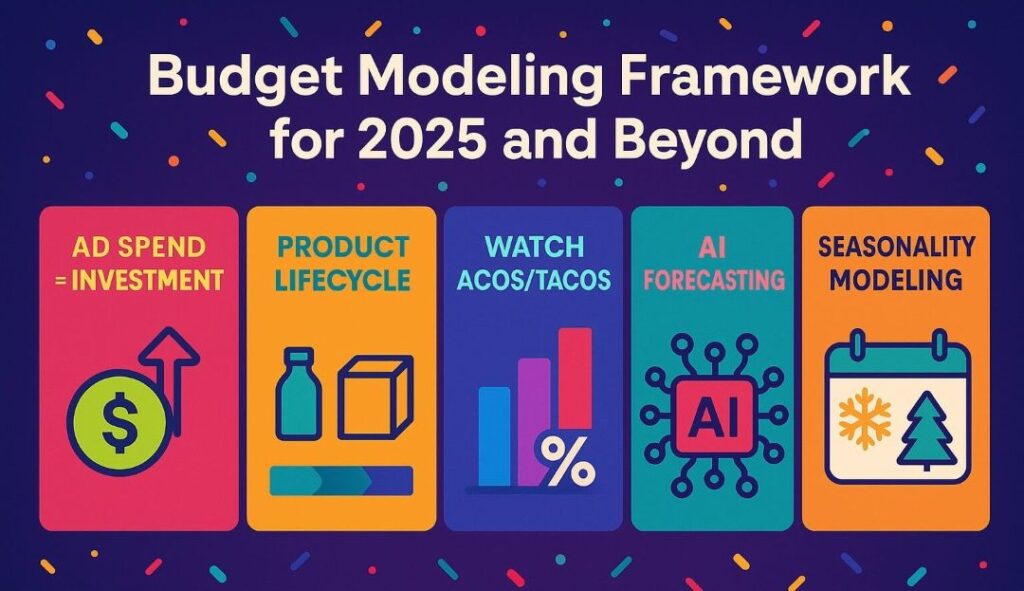
Budgeting on Amazon has become more complex, but with structure and forecasting, advertisers can turn unpredictability into an advantage.
View every pound of ad spend as capital. Your objective is to invest it where it delivers measurable returns. SellerMetrics helps brands model campaign scenarios by factoring in conversion trends, click-through rates, and seasonality.
Each product stage requires a different approach:
This structure ensures that every campaign supports long-term goals rather than reacting impulsively to daily fluctuations.
Metrics such as what is a good ACoS on Amazon and what is a good TACoS on Amazon act as your guiding benchmarks.
If ACoS or TACoS rise without an equivalent improvement in conversion rates, tighten budgets immediately. Don’t wait for weekly reports to catch these signals.
Artificial intelligence is reshaping how sellers plan campaigns. By feeding advertising data into AI-powered systems, SellerMetrics can predict when costs are likely to rise and when conversions will drop. These insights allow you to make pre-emptive adjustments instead of reacting to performance dips after they happen.
Holidays, paydays, and major events like Prime Day heavily influence traffic and bidding intensity. Incorporate these factors into your forecasting. The better you anticipate changes in demand, the easier it is to plan your spending pace and keep control under Amazon’s new budget rules.
The advertising landscape on Amazon has evolved. The new rules are not designed to make life harder for sellers; they’re designed to maximise Amazon’s revenue through automation and predictive algorithms. However, sellers who understand the system and take proactive control can still win.
To succeed, your brand needs:
At SellerMetrics, we combine strategic expertise with advanced Amazon advertising management tools to help you regain control over your campaigns. Our systems monitor budget pacing, optimise bids, and safeguard your ad spend across marketplaces.
If you’re ready to future-proof your advertising strategy and build sustainable growth, book a free strategy call with SellerMetrics today. Together, we’ll create a data-driven roadmap that keeps your budgets efficient and your profits predictable.
Yes. Under Amazon’s new budget rules, the platform can exceed daily budgets by up to 25% when it detects high-value buying activity. This is intentional and based on predictive data models, not a system glitch.
It’s intentional. Amazon’s system now prioritises visibility and opportunity capture over strict pacing, allowing it to spend more when conversion potential is high.
Not necessarily. Monthly budgets can make overspend less visible because they smooth results over time. Without automation, cumulative overspending can occur.
Yes. You can prevent unwanted redistribution by creating isolated campaign structures and using dedicated budgets for each ad group. SellerMetrics can help set this up.
Absolutely. Smaller accounts are more vulnerable to overspending because they have less room for error. Implementing automation and daily monitoring is crucial.
No. AI supports decision-making but cannot replace strategic insight. The best results come from blending AI automation with expert human analysis.
Yes. Building off-Amazon authority through generative SEO reduces reliance on paid ads and improves organic ranking on Amazon.
No, but limit their budgets and monitor them carefully. Automatic campaigns are valuable for keyword discovery but can overspend without controls.
Yes. Dayparting is more important than ever for controlling spend during low-conversion periods. Adjusting bids by time of day improves efficiency.
The biggest mistake is trusting Amazon to manage pacing without safeguards. Without layered controls, budgets are at risk of rapid and unnecessary depletion.

13 June 2026
TweetLinkedInShareEmailPrint 8 min read By Rick Wong Updated Jun 13, 2026 TL;DR What is Amazon Multi-To...

12 June 2026
TweetLinkedInShareEmailPrint 8 min read By Rick Wong Updated Jun 13, 2026 TL;DR What is Alexa for Shopp...

8 June 2026
TweetLinkedInShareEmailPrint 14 min read By Rick Wong Updated Jun 08, 2026 TL;DR How should I structure...